
• Visit
    • Plan Your Visit
    • History Center in Douglas
    • Museum at Mt. Baldhead
    • Demerest Fishing Shanty
    • Douglas Walking Tour
    • Additional Sites
  • History
    • History Resources
    • Online Catalog
    • Exhibitions
    • Projects
    • Genealogy
    • Maps
  • Support
    • Support
    • Join
    • Donate
    • Volunteer
    • Sponsor
  • About
    • About SDHC
    • News
    • Staff & Board
  • Events
  • Shop Online
  • Subscribe
  • Contact Us
Skip to Main Content
Search
  • Hours & Locations
  • Shop
  • Donate
  • Visit
    • Plan Your Visit
    • History Center in Douglas
    • Museum at Mt. Baldhead
    • Demerest Fishing Shanty
    • Douglas Walking Tour
    • Additional Sites
  • History
    • History Resources
    • Online Catalog
    • Exhibitions
    • Projects
    • Genealogy
    • Maps
  • Support
    • Support
    • Join
    • Donate
    • Volunteer
    • Sponsor
  • About
    • About SDHC
    • News
    • Staff & Board
  • Events

←GO BACK

37. Saugatuck Chain Ferry
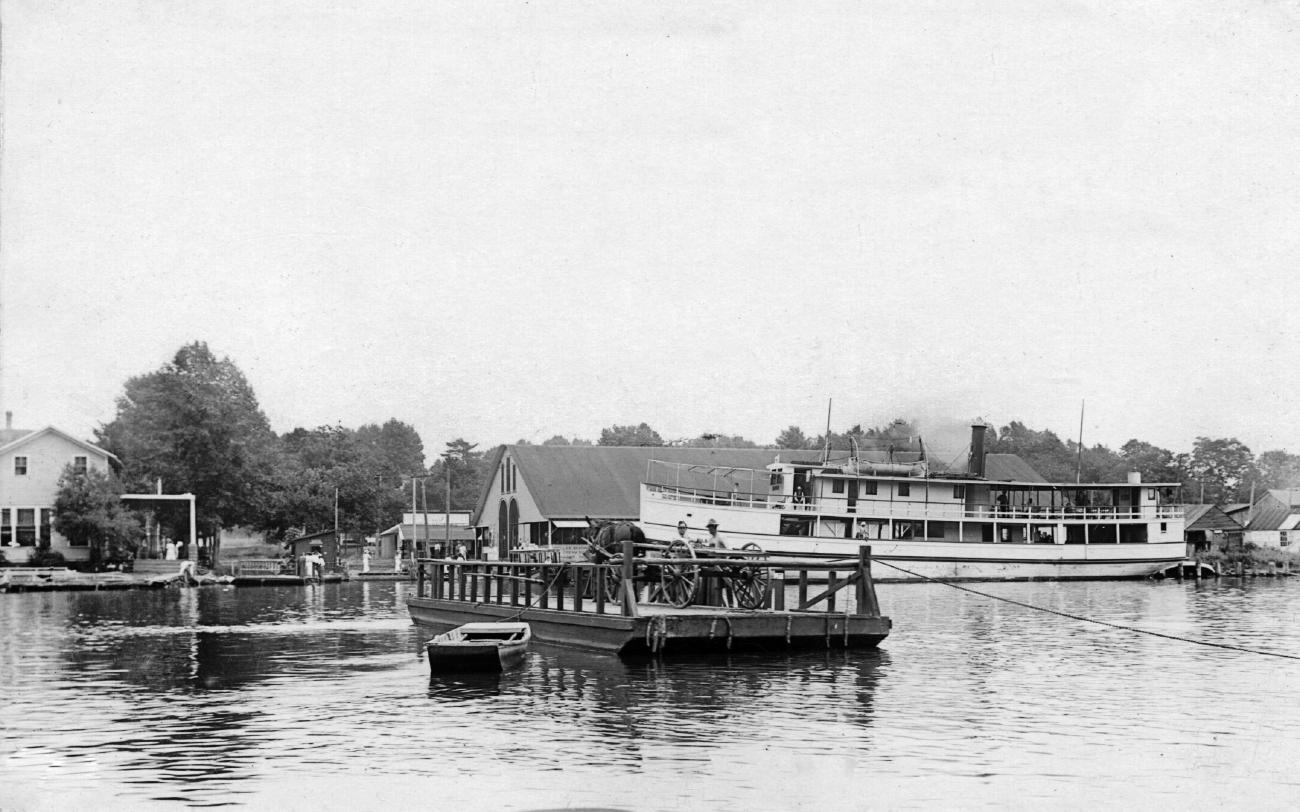
The Saugatuck Chain Ferry in 1908. Today’s ferry is not large enough to carry a horse and wagon, but it still departs from the same landing at Mary and Water Street.


For Saugatuck’s settlers on the east side of the Kalamazoo River, the only way to reach Douglas was by rowboat. Around 1833 a bridge was built at Mary Street but it didn’t last long. The wooden structure was so relentlessly battered by winter ice, floating logs and schooners that it collapsed in 1856. The best possible solution was the now-famous Saugatuck Chain Ferry that debuted 1857. Originally, the trip cost 5 cents. It was so popular that soon grocery and refreshment stores popped up at the ferry landings.

The ferry is a flat, barge-type boat called a scow. The first versions of the ferry were large enough to hold a wagon and team of horses plus dozens of passengers. Eventually automobiles made the crossing. A 400-foot underwater chain connects the ferry to its landings on each side of the river. A hand-cranked winch hauls the ferry along the chain. The ferry captain makes sure it is safe to cross but usually a younger person, historically called the cranker, provides the muscle power to turn the wench.

Mr. R.J. Peterson built the present ferry craft, the white, gingerbread-adorned Diane, in 1965. Diane is the last hand-cranked chain ferry in the United States.


Contact

P.O. Box 617
Douglas, MI 49406
(269) 857-5751
Contact Us

Hours & Locations

About
  • About
  • Staff & Board
  • Policies
  • News
Subscribe to Our Newsletter

Sign up to receive periodic emails about our activities.

Subscribe

  • Facebook
  • YouTube
  • Instagram
  • Michigan Arts & Culture Council
  • Candid. - Gold Transparency 2023
  • National Endowment for the Arts

© 2026 Saugatuck-Douglas History Center

  • Privacy Policy

Museum Website Design by Landslide Creative