
19. Lakeshore Summer Chapel
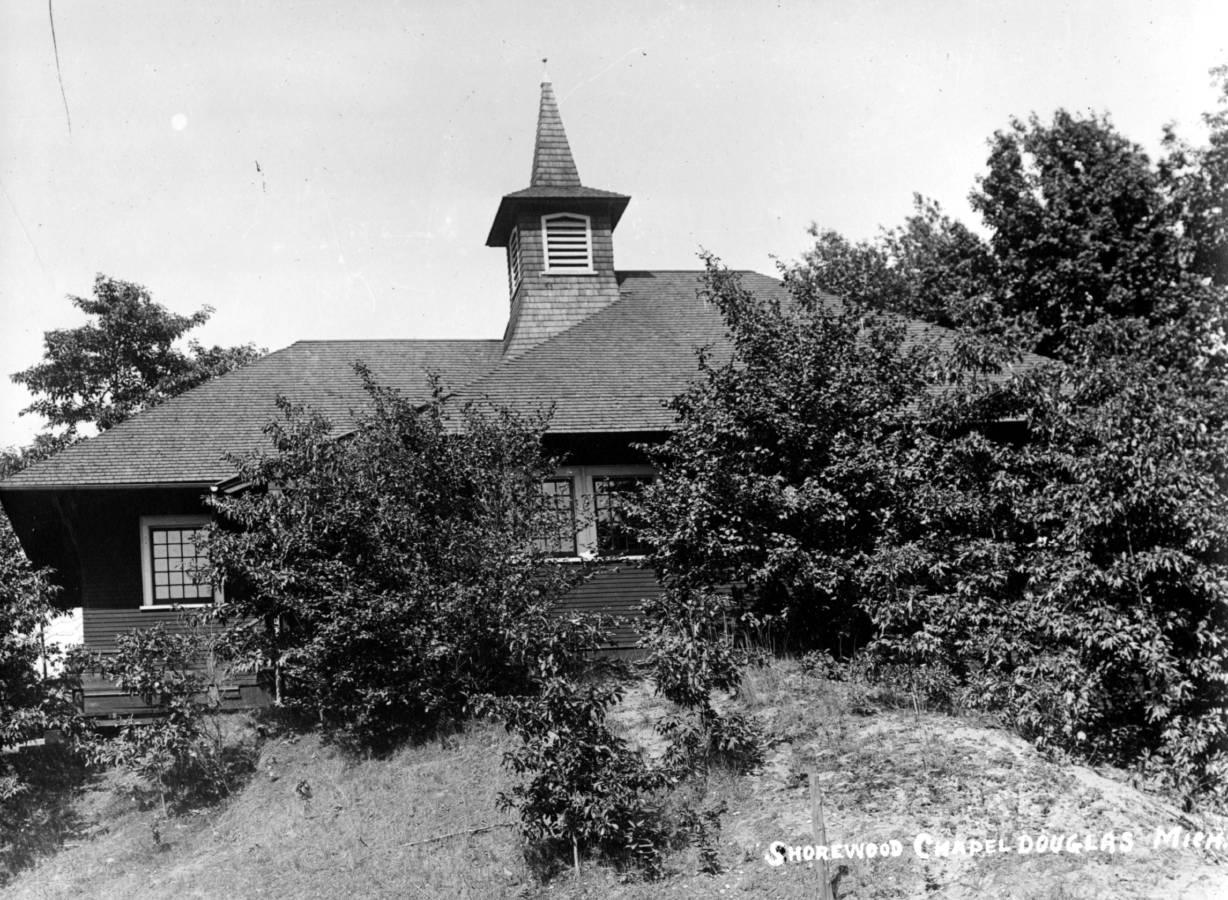
It started with Sunday evening song fests on the Douglas beach in the late 1800s. After several years, one of the beach moms, Annie J. Vosburgh of Oak Park, Illinois, organized Sunday services in her Douglas cottage for Lakeshore adults and children. Soon over a hundred worshipers were squeezing into Mrs. Vosburgh’s cottage, and starting with $100 worth of pennies collected by the children, a little chapel was built on a dune on Farmer McVea’s land, right smack on the border between Douglas and Saugatuck. It is said that the idea was finalized by a building committee during lunch at Marshall Field’s Grill Room in Chicago. The design was by Harry L. Walker, a young architect from Oak Park, Illinois. The new Shorewood Chapel thrilled the returning cottagers in the summer of 1904: a charming wood structure with a fine flared roof, wood clapboard siding, exposed interior structure, and big windows, each with 48 panes of clear glass — opening to the woods to welcome the roar of Lake Michigan beyond. It was built in a craftsman-prairie style — made popular by another Oak Park architect of the time, Frank Lloyd Wright — with the intent of unifying human life with nature and God. The simplicity of the chapel was to reflect the simplicity of the pastoral summer, away from the confusion and bustle of urban life. Folding chairs, donated by Annie Butts, a Chicago school teacher, were all the furniture that was needed. The chairs had red plush seats and were used for 31 years. The first sermon preached in the chapel approved of something Protestant teaching had often condemned: “Vacations may deepen the religious life as well as reinforce physical life … All proper pleasures are perfected, not spoiled, by the presence of God.”
Text by Dr. James Schmiechen for the 2004 Saugatuck-Douglas History Museum exhibit “Tales of the Villages.”