
17. Forward Movement / Presbyterian Camps
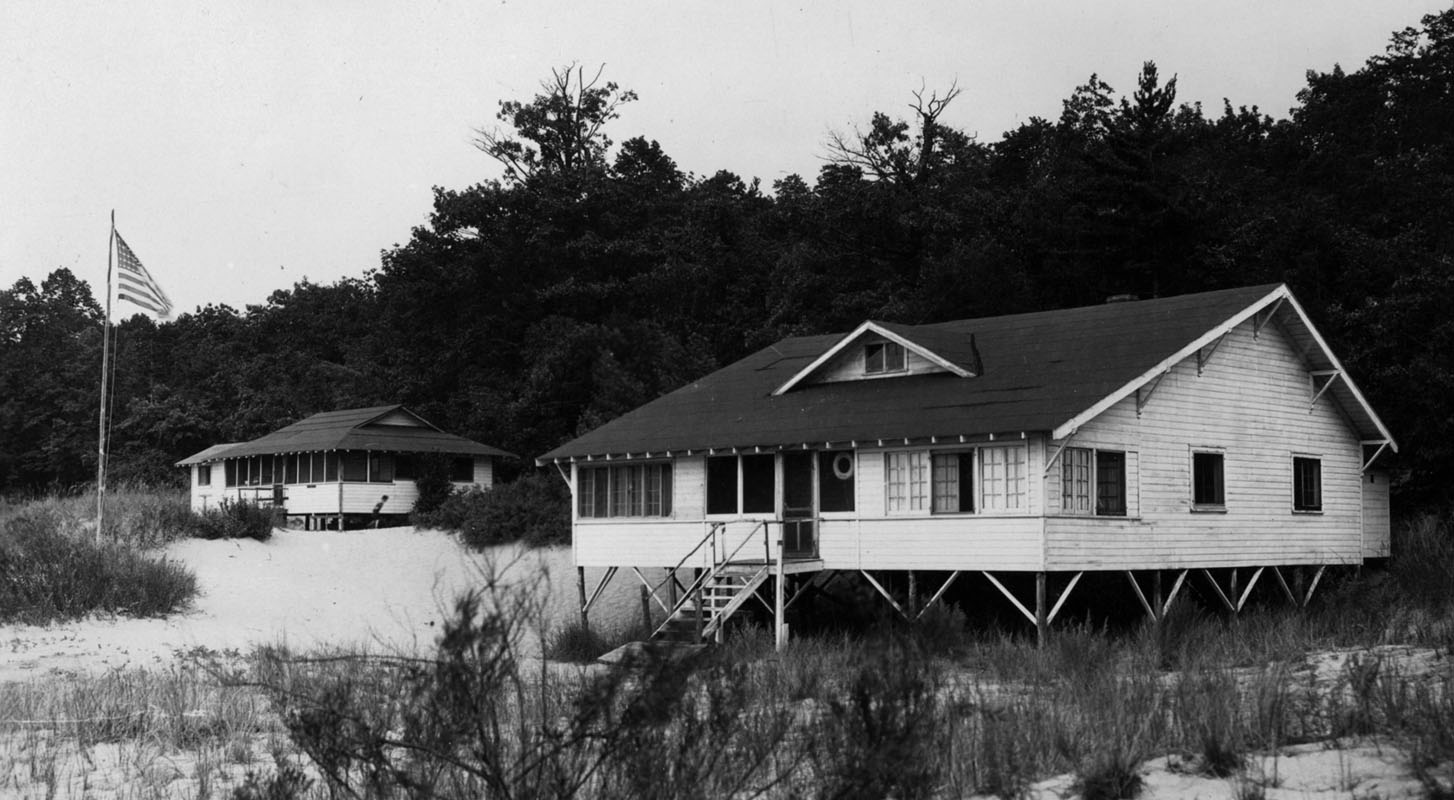
In 1899, Reverend George W. Gray, a minister of the Methodist Episcopal church and superintendent of the Forward Movement mission in Chicago, purchased about 140 acres of shoreline and wooded dunes to establish the Forward Movement Park — a camp for urban children and their “tired” mothers to experience nature as a path to moral and spiritual enrichment. The camp was promoted as a “Chautauqua for the Poor.”
Reverent Gray died in 1913. The park was renamed Camp Gray in his honor in 1916. Many rustic cottages and tenting areas were built along with larger dining halls and recreation buildings. Early campers arrived by steamship from Chicago. After 1917 they rode the Pere Marquette railroad to Fennville where they were picked up by camp busses. In 1921, the camp was acquired by the Presbytery of Chicago.
Over time the camp blossomed into a collection of camps; some areas for inner-city children, others for suburban families, or even Jewish campers. Collectively, the place was called the Presbyterian Camps.
In the early 2000s, the Presbytery of Chicago was $7.9 million in debt from an $11 million loan taken out to pay off victims of a 1990s sex scandal (that did not occur at the camp). Despite efforts to raise money to save the camp from being sold, in 2014 Paul Heule, the head of Eenhoorn, Inc., a privately-owned international real estate investor and management firm, purchased the camp property. The camp was razed in 2014 to build a luxury home development named Dune Grass.