
20. Arts & Crafts Cottages
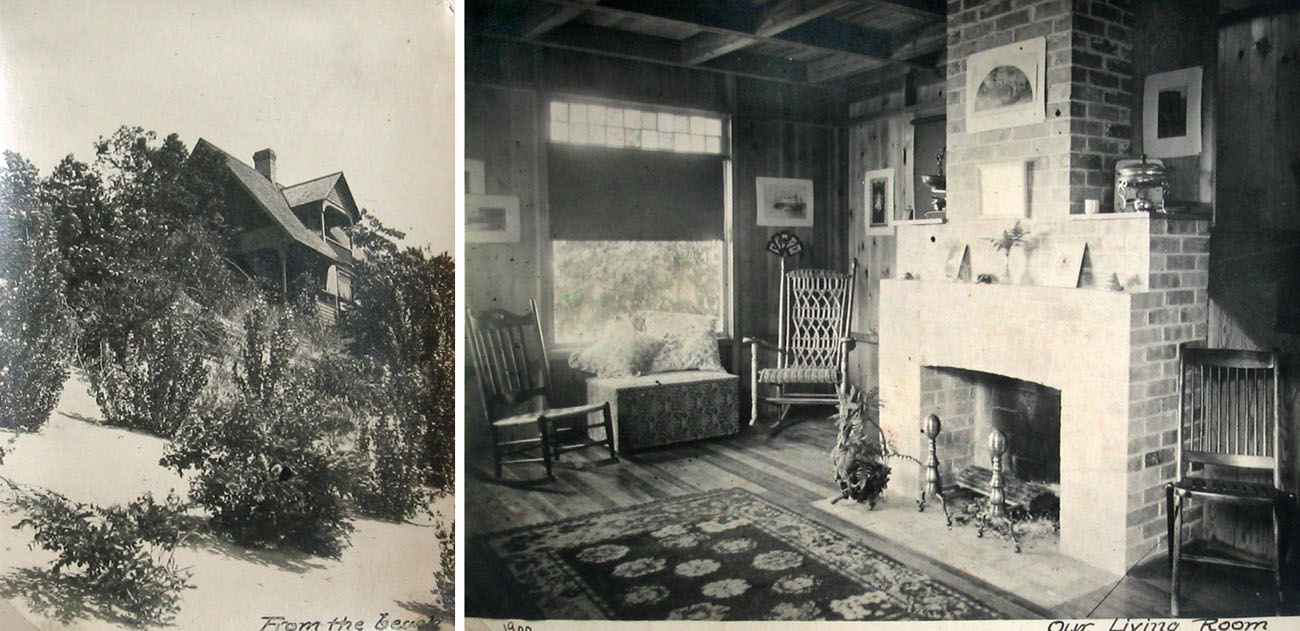
Between about 1876 and 1920, the American Arts & Crafts movement revolutionized in the way people approached house design and daily life. The movement promoted “back-to-nature” social reforms that included concerns for human moral, spiritual and physical health. This philosophy was expressed by the work of Chicago (particularly the suburb of Oak Park) and Midwestern architects, home builders and furniture designers.
Many of the early summer cottage dwellers along the Douglas-Lakeshore Drive area were influenced by these ideals and looked to Frank Lloyd Wright, Elbert Hubbard, the Stickley Brothers, and Thomas Eddy Tallmadge for examples of how to build and furnish homes. One of the most popular plan-book houses was the Craftsman Bungalow — but others were architect-designed or simply owner-made. A later interpretation of these ideals was the reproduction log cabin, a craze that hit the area in the 1920s and 1930s. Respect for trees and simple design was key. The whole idea was to respect nature, not interrupt it.
The Lakeshore Chapel at 880 Campbell Road and Lakeshore Drive and the cabin at 11 Lakeshore Drive in Douglas are other excellent example of American Arts & Crafts structures.